Why Residential Plots are Outperforming Apartments in Bangalore in 2026?
Bangalore is a posh IT hub of India that has become a centre of investment because of its growing property demand. The most demanded property was an apartment near an IT park. This demand in 2026 has shifted from apartments to plots.
Residential plots are now doing much better than apartments in terms of price growth and buyer demand. This is a big shift caused by land scarcity, new infrastructure, and changing buyer needs.
A new project, KNS Samooha, is coming up in the prime area of the city and features plots in various sizes. The brand name, price of land parcels, and proximity to the airport have made it a top choice to invest in.
The reasons why residential plots are outperforming apartments in Bangalore in 2026 are:
1. The Power of Land Scarcity
One of the main reasons plots are more in demand than flats is because of limitation. Flats are built and then given for sale, but land is a finite asset.
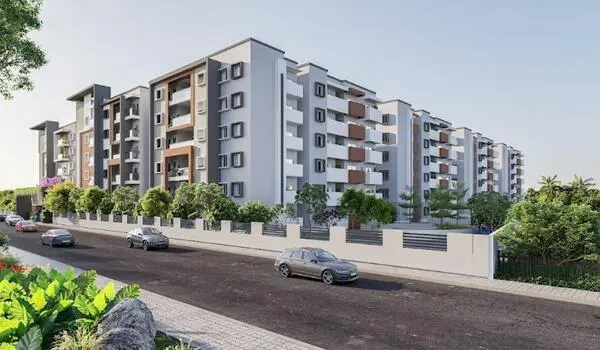
- The Vertical Glut: In areas like Whitefield and the ORR, the skyline is full. Developers can always build new 30-story towers. This high supply slows down how fast prices rise. By 2026, some areas will have too many apartments, which lowers their exclusive value.
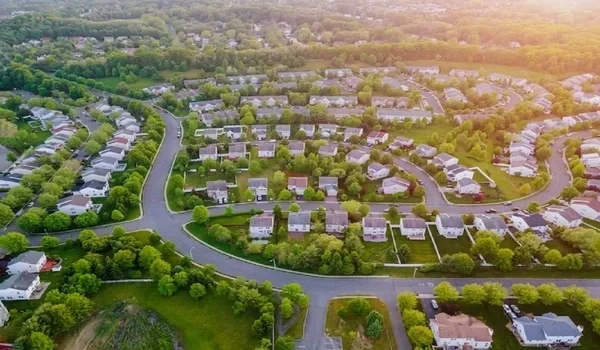
- The Horizontal Crunch: Available land for development has almost disappeared in Bangalore’s core areas. If you own a plot in a gated community, you own a strictly limited resource.
As the economy adds over 100,000 new jobs yearly, the demand for space grows while the supply of land stays the same. This makes land prices rise much faster than building prices.
2. Driving growth for infra
In 2026, Bangalore is no longer focused on just one centre. It has become a multi-polar city thanks to massive infrastructure projects.
- The STRR: The Satellite Town Ring Road (STRR) is the biggest driver for plot prices. Sections like Dabaspet to Devanahalli are now operational. Areas like Kanegowdanahalli and Hoskote are now easily connected to the airport and tech hubs.
Land prices in these belts jumped by 20–30% in 2025-26, beating apartments in congested areas. This has also increased the
- Metro and Suburban Rail: The expansion of the Metro Green and Blue Lines and the Suburban Rail is also helping. Investors are buying land near future stations to catch the high-growth phase. Unlike city apartments, these peripheral plots offer much higher potential returns during the construction phase.
3. Appreciation vs. Depreciation
From a financial view, land has a natural advantage over buildings.
- Structure Depreciation: An apartment includes a physical building that loses value every year. It requires constant spending on maintenance, painting, and repairs to keep its worth.
- Promising appreciation: A plot of land will not depreciate or wear off with time. Whereas a flat will depreciate with time and will need regular maintenance fees. Investors prefer plots over flats because this helps them avoid the high monthly maintenance charges of apartments.
4. The "Flexibility" Premium and Customisation Demand
Buyers have now moved to buying land rather than already developed apartments. This is because land parcels give flexibility to buyers to build a home of their choice. This also helps homeowners to plan their budget and build a home as per their budget.
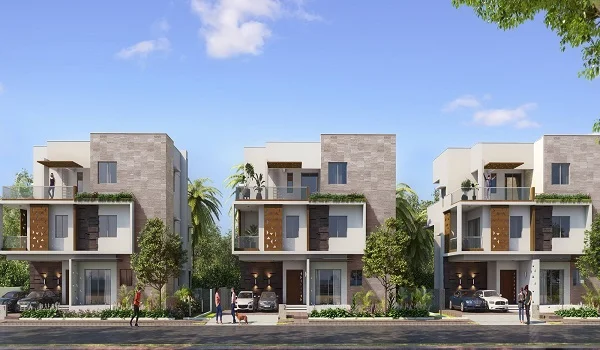
The Customisation Trend: Buying a plot offers the ultimate luxury of freedom. In 2026, there is a surge in demand from wealthy buyers and senior executives for custom-built "villas" and independent homes. A plot allows owners to control their layout and include sustainable green features.
They can build private gardens and ensure total privacy. These benefits are not possible in a dense apartment complex.
Phased investment. For many buyers, a plot is a smart phased financial strategy. They can lock in land at today’s prices (such as Rs. 4,500/sq. ft.) in a growth corridor. They can hold it for 5 years while the value rises to Rs. 7,000/sq. ft. to 11,000/sq. ft. This depends on the area, which is a top IT hub.
Later, they can use their savings to build their dream home without taking a massive construction loan upfront.
5. Strict documentation
In the past, plotted developments were seen as risky due to legal issues, encroachment, and bad documentation. This has changed completely in 2026.
Branded Land Banking. The plot market has matured and now matches the branded apartment segment. Top builders like KNS Group, Prestige, Godrej, and Sattva now offer RERA-registered projects. These branded, gated, plotted townships provide a safe investment environment.
These layouts come with clear titles and approvals from authorities like BDA or BMRDA. They include underground utilities, clubhouses, and advanced security systems. This has removed the "fear factor" for millennial investors and NRIs. They can now focus on the high appreciation potential of land without worrying about legal problems.
Conclusion: The Investment Sweet Spot of 2026
Apartments in Bangalore still serve a vital purpose today. They are great for users who need immediate housing near work. They also suit investors who want steady monthly rental income, with yields around 3.5%.
However, if your goal in 2026 is maximum capital growth and long-term wealth, residential plots are the winners.
We are in a multi-year cycle where infrastructure is opening new horizons. The limited supply of land ensures its irreplaceable value. If you missed the 2015 apartment boom in Whitefield, the 2026 plot boom in North and East Bangalore is your second chance.
FAQ
1.What is the real estate market forecast for Bangalore in 2026?
The investment potential in Bangalore's real estate looks very promising for 2026. This growth is building on the strong momentum seen last year. Experts project price appreciation rates of 5-7% for mid-income properties.
Luxury properties are expected to see even higher growth of 8-10%. These rising rates show a positive trend for property investors in the city. Bangalore remains a top choice for real estate investment due to these steady returns.
2.Will property prices decrease in 2026?
No, the property prices will not decrease in 2026; instead, there will be a slight appreciation in the current year. Buyers should focus on good options with strong rental demand, affordability, and high ROI units.
3.What is the 2% rule for properties?
The 2% rule is a guideline that some investors use to check rental performance. The monthly rent should be about 2% of the property's purchase price. This rule is one of many ways to evaluate a property's potential.