Bank Loans for Gated Community Plots: What You Need to Know
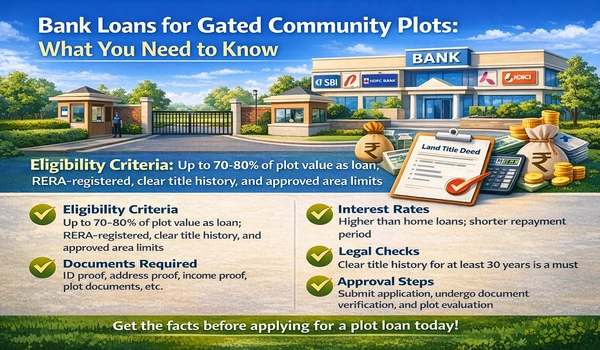

Featured Image of Bank Loans For Gated Community Plots Eligibility Interest Rates And Approval Guide 2026

Getting a bank loan for a gated community plot is different from getting a home loan. Banks follow strict rules before giving money. In 2026, banks like SBI, HDFC Bank, ICICI Bank, and Axis Bank usually give up to 70% to 80% loan of the plot value. But the project must be RERA-registered and inside approved limits like BMRDA or HMDA. To get the loan easily, the land should have a clear title history for at least 30 years. You also need proper savings because you must pay the remaining amount yourself as a down payment. Most banks also give a shorter loan period compared to home loans. Some banks like Bank of Baroda and Union Bank may also ask you to start house construction within 3 to 5 years after buying the plot.
Plot Loan vs. Home Loan: The Key Differences


Banks see plot loans and home loans as two different types of loans with different sets of rules. Knowing these differences helps you plan your money better, for down payment, interest rates, and tax savings.

Purpose of the Loan

The biggest difference is what you are buying:

  • Home Loan: Used to buy a ready house, an under-construction home, or a renovation
  • Plot Loan: Used only to buy vacant residential land or a gated community plot
  • (Not allowed for agricultural land)

Loan Amount (LTV – Loan to Value)

The LTV shows how much the bank will pay:

  • Home Loan: Banks usually give 80% to 90% of the property cost
  • Plot Loan: Banks give only 70% to 80%

So for plots, you need a bigger down payment from your side.

Loan Tenure (Repayment Time)

How long do you get to repay the loan?

  • Home Loan: Up to 30 years
  • Plot Loan: Usually 10 to 15 years

So, plot loans have a shorter repayment time.

Tax Benefits

It is very important for savings:

  • Home Loan: You get tax benefits on principal (80C) and interest (24b)
  • Plot Loan: No tax benefit when you buy the land

You only get tax benefits after you start building a house. At that time, it may be converted into a home loan.

Construction Rule

Banks also have a condition for plot loans:

  • Home Loan: No need to build (house is already there)
  • Plot Loan: You may need to start construction within 2 to 5 years

If you don’t build, some banks may increase interest rates or ask for faster repayment.

Comparison Summary

Feature Home Loan Plot Loan
Max Tenure Up to 30 Years Up to 15 Years
Funding (LTV) 80% – 90% 70% – 80%
Tax Benefits Available immediately Only after construction starts
Property Type Built/Under-construction house Vacant residential land
Interest Rates Generally lower Slightly higher (by 0.5% – 1%)

Eligibility Criteria for Plot Loans in 2026


Getting a plot loan in 2026 depends on two main things: your financial strength and the legal status of the land. Banks are more strict with plot loans because empty land is seen as a higher risk than a built house.

Borrower Requirements

  • Age & Employment: Applicants must be 21 to 65 years old. Salaried people need at least 2 years of work experience. Self-employed people need at least 3 years of stable business.
  • Financial Health: A CIBIL score of 750 or more is usually needed for good loan approval and better interest rates. The monthly income should be enough to manage the loan EMI easily.

Property Requirements

  • Type of Land: Banks only give these loans for residential plots found inside the city or in areas approved by groups like the BDA or DTCP. You cannot get these loans for farmland or agricultural land.
  • Legal Clearances: The plot must have RERA approval, a clear Non-Agricultural (NA) status, and a proper approved layout plan.
  • Building Timeline: Unlike a standard home loan, many lenders like SBI and ICICI include a specific condition: the owner must start building a house on the plot within 3 to 5 years of getting the loan.

Current Plot Loan Interest Rates


In 2026, plot loan interest rates in India are usually between 8.50% to 10.50% per year. After the RBI kept the repo rate at 5.25%, loan rates have stayed mostly the same.

Banks give better rates to people with a CIBIL score of 750 or above.

  • HDFC Bank & Kotak Mahindra: starting around 8.75%
  • ICICI Bank: starting around 9.00%
  • SBI & PNB Housing: starting near 9.50%

Plot loans are slightly costlier than home loans because banks see empty land as riskier. So interest rates are usually 0.05% to 0.50% higher than home loans.

Essential Legal Checklist Before Getting a Bank Loan


Before giving a plot loan, banks check all legal documents. Here is the simple checklist to make sure a gated community project meets bank rules in 2026:

RERA Registration: The project must have a valid RERA number. It means the project is approved and follows government rules, giving safety against delay or fraud.

Approved Layout Plan: Plot should be part of a government-approved layout from authorities like BDA, DTCP, or HMDA. Banks fund only approved layouts.

Non-Agricultural (NA) Certificate: Land must be officially converted for residential use, not agriculture.

Encumbrance Certificate (EC): Must show no loans, legal issues, or disputes on the property for the last 15 to 30 years.

Ownership History (Mother Deed): The bank needs to see who owned the land for the last 30 years. There should be no missing names or gaps in the records to prove the title is clear.

Tax Receipts: All property taxes must be paid. Bank checks to confirm there are no pending dues.

Documents You’ll Need for Bank Loan


To apply for a plot loan, a few important documents are needed. Banks check these to confirm who you are, your income, and details of the land.

KYC & Personal Documents

PAN Card

Aadhaar Card

Passport-size photos

Address proof (Passport or Voter ID also accepted)

Income Proof

✔ Salaried people:

  • Last 3 months salary slips
  • Last 6 months bank statements
  • Latest Form 16

✔ Self-employed people:

  • Last 2 years Income Tax Returns (ITR)
  • Profit & Loss statement
  • Balance Sheet

Property Documents

Sale Agreement

Mother Deed / Title Deed (shows ownership history for 30 years)

Encumbrance Certificate (EC) for 15–30 years

RERA Registration Certificate

Non-Agricultural (NA) Certificate

✔ Latest Property Tax Receipts

Step-by-Step Guide to Secure Your Loan


Getting a plot loan follows a clear step-by-step process. Banks first check your budget, then verify the land details, and finally release the loan.

Step 1: Pre-Approval

Before choosing a plot, check with banks like SBI or HDFC how much loan you can get. Based on your income and CIBIL score (750+), the bank gives a pre-approval letter. A pre-approval letter shows the loan amount you can get, making it easier to choose a plot within your budget.

Step 2: Application Process

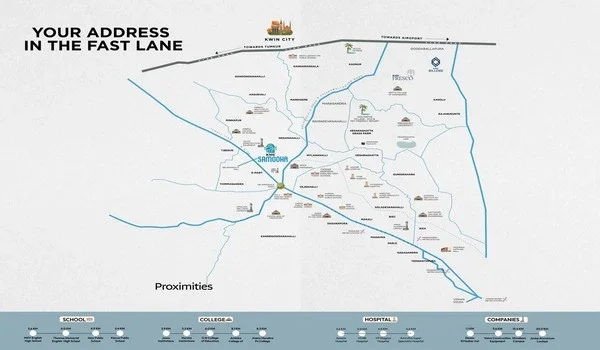
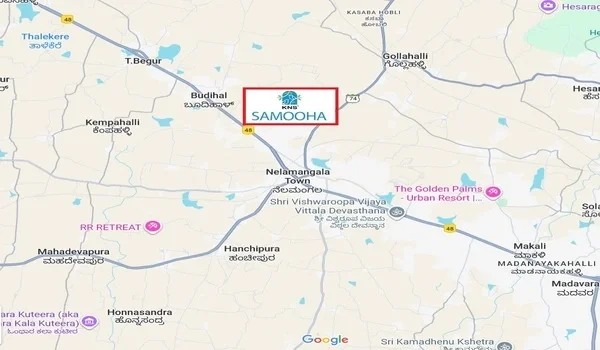
After selecting the plot of your choice, make sure you submit ID proof, income proof, and the loan application form. A processing fee of 0.5% to 1% is paid to the bank to start the verification process. Banks process loans faster for KNS Samooha because the approvals and legal documents are clear and well-arranged.

Step 3: Verification

The bank confirms job, income, and address details. An officer might visit the home or office, or use online tools to make sure all the information is correct.

Step 4: Legal & Technical Verification

It is the most crucial phase where the bank’s own experts take over:

  • An Engineer verifies the plot size, location, and market value.
  • A Lawyer checks the Mother Deed, RERA approval, and ownership history for the last 30 years.

Step 5: Sanction Letter

If everything is correct, the bank gives a sanction letter. It shows: Loan amount, Interest rate, EMI details and Rules for starting construction.

Step 6: Final Payment

After signing the agreement, the original documents are kept with the bank. The bank then sends money directly to the seller or developer.

Enquiry
Enquire Now