History of Nelamangala, Bangalore - A Journey Through Centuries
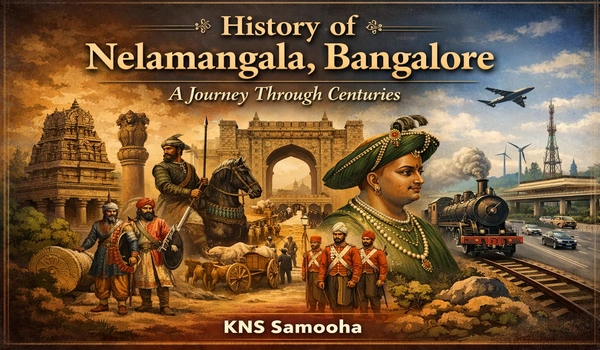
Nelamangala, a prominent town in Bangalore Rural district, is located at an important junction of major highways in Karnataka. Many people see it as just a pass-through place, but its history is very old, even older than modern Bengaluru. Long ago, it was the second capital of the Ganga Dynasty, called Maanyapura (Manne). Big kingdoms like the Cholas, Hoysalas, and Vijayanagara Empire ruled this area. Old history can still be seen in places like Jain temples (Basadis) from the 8th century and stone carvings in Binnamangala. By the 17th century, it had become a busy trading place where people came to buy and sell goods. Nelamangala was once a powerful and important place, and today it has become a key transport and logistics hub.
The Origins - What Does "Nelamangala" Mean?
The name comes from two simple Kannada words: Nela and Mangala. In the local language, Nela means "land" or "earth," and Mangala means "auspicious" or "holy." Together, the name describes a beautiful, blessed land. Local stories say that centuries ago, the area was known as Nelavamangala. This town served as a main hub for the Vijayanagara Empire back in the 1400s. People chose this spot because the soil was rich for farming and the location was perfect for travellers. Over many years, the long name was shortened to what people call it today.
The Ancient Roots: The Ganga Dynasty & Manne
The story of Nelamangala began more than 1,200 years ago during the time of the Ganga Dynasty. These kings ruled a large part of South Karnataka. Their main capital was in Talakadu, but they also made a nearby place called Manne (Maanyapura) their second capital. Around 797 AD, King Sripurusha and his son lived here. It was a busy and important city. Many stone temples and Jain Basadis were built for prayer and learning.
Even today, old temple ruins like the Kapileshwara Temple can be seen in Manne. These stones show the great skill of builders in those days. Later, the Chola Empire took control of this area. Slowly, many old buildings broke down, but their strong base is still under the ground. All these show that the Nelamangala area was once a powerful and important place, long before modern roads and cities came.
Chola and Hoysala Architectural Marvels
After the Ganga kings, the Chola Empire took control of the area about 1,000 years ago. They were known for building strong stone temples with detailed carvings. One good example is the Mukthinatheshwara Temple in Binnamangala. It has Tamil writings (inscriptions) from around 1110 AD. The walls show gods and dancers, and the carvings still look clear and lively even today.
Later, the Hoysala Empire came and added their own style. They used a soft stone called soapstone, which helped them make very small and detailed designs. Their work can still be seen in places like Heggunda and Shivagange hills. They built temples with star-shaped bases and tall towers. Because of these empires, the Nelamangala area became a place full of beautiful old temples and art, which people still visit and study today.
The Vijayanagara Period - Trade, Temples & Inscriptions
During the 1400s and 1500s, the Vijayanagara Empire made this area a major centre for power and trade. At that time, the place was called Nelvamangala. Rulers chose this place because it was on an important travel route. Many traders and travellers passed through, so local markets grew fast. People traded silk, grains, and handmade goods. The rulers also built and repaired many big temples. One well-known place is the Lakshmi Venkataramanaswamy Temple in Basavanahalli.
Stories say a sage named Koundinya once lived there. Later, the Vijayanagara rulers added strong stone walls and tall entrance gates. Old stone writings (inscriptions) found here tell how kings gave land and support to temples. These records show that the town was once a rich and holy place for people travelling across South India.
Transition to Modernity: From Mughals to Mysore Rajas
During the late 1600s, the area around Nelamangala saw many changes as new rulers came. The Mughal Empire took control for a short time around 1689. They saw the place as important because it helped in moving goods and soldiers. Soon, the Mughals gave the land to the Mysore Rajas (Wodeyars).
Under the Mysore rulers, Nelamangala became a peaceful farming town. They built water tanks for farming and supported weavers and traders. Because of this, the town grew in silk work and agriculture instead of war. Later, even when the British came, the Mysore rulers kept the local culture and traditions alive. Over time, the place changed from a military place into a well-settled and growing town, which helped shape the Nelamangala seen today.
Heritage Temples of Nelamangala
Nelamangala has many old temples that show the history of South Indian kings. These places are known for beautiful statues and stone carvings.
- Mukthinatheshwara Temple (Binnamangala): Built by Chola King Kulothunga I around 1110 AD. It is a Shiva temple with detailed stone work. The ceiling has a special carving of the eight direction guardians (Ashtadikpalas).
- Lakshmi Venkataramanaswamy Temple (Basavanahalli): Dedicated to Lord Vishnu and Garuda. Located in an old place called Koundinyashrama. It has tall stone pillars and a calm pond shaped like a conch.
- Mahalingeshwara Temple (Town Centre): One of the oldest Shiva temples in the area. Located near the main town pond. Built with a simple and strong stone design from early Chola times.
- Vishwa Shanti Ashram (Arasinakunte): A modern spiritual place with a 36-foot-tall statue of Vijaya Vittala. The temple walls have all 700 verses of the Bhagavad Gita carved in stone.
Famous Places Near Nelamangala With Historical Significance
Many places near Nelamangala show the old history of kings and battles. These spots are good for a short trip to learn history.
- Shivagange (15 km): Called Dakshina Kashi. It is a hill with old cave temples built by the Hoysalas. It was also a fort used by Kempegowda and has natural water pools.
- Nijagal Betta (12 km): A rocky hill with an old fort from the 1700s. Big battles happened here between the Marathas, Hyder Ali, and the British. Old stone carvings can still be seen on top.
- Devarayanadurga (35 km): A hill town with a fort, named after a Mysore king. It has two very old temples called Yoga Narasimha and Bhoga Narasimha, built into the rocks.
- Manne Village (20 km): Known as Maanyapura in the past. It was the capital of the Ganga Dynasty. Today, you can see the ruins of old temples and Jain shrines.
- Heggunda (18 km): A place with a rocky hill and old writings from the Hoysala time. It also has Hero Stones (Veeragallu) made for brave soldiers who died in battles long ago.
KNS Group Prelaunch Project is KNS Samooha.